
The Countries That Changed My Perspective on Freedom

I was 26 when I bought my one-way ticket out of the system. Ten years and 60+ countries later, I’m still not back.
But here’s what nobody tells you about becoming a digital nomad: you don’t just see the world differently. You start seeing freedom differently.
The word gets thrown around constantly—by politicians, corporations, Instagram influencers selling courses. Everyone claims to know what it means. But after a decade of living outside the borders most people never cross, I can tell you this: almost everything we’re taught about freedom is a carefully constructed lie.
These four countries didn’t just change where I live. They changed how I think about what it means to be free.
Georgia: The Freedom to Be Forgotten
Tbilisi hit me like cold water.
I’d been in Western Europe for months—dealing with bureaucracy, registration requirements, proving my existence to seven different government departments just to open a bank account. I was exhausted by the machinery of the modern state, the constant requirement to justify your presence, your income, your intentions.
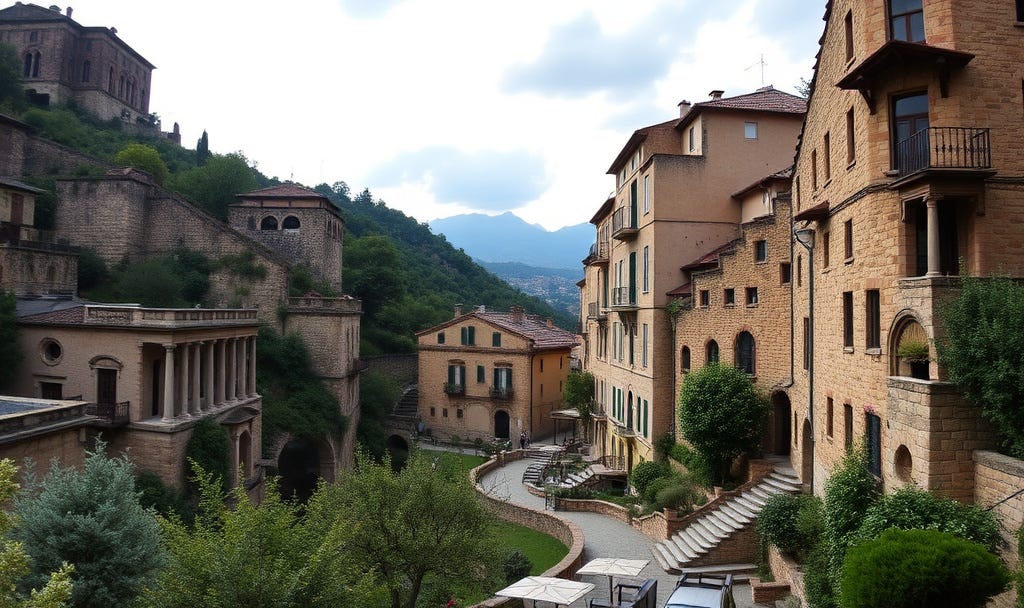
Then I landed in Georgia.
Within three days, I had an apartment (cash, handshake, done), a local SIM card, and I’d met half the expat community over wine that cost less than bottled water back home. Nobody asked for papers. Nobody wanted proof of anything. The landlord looked me in the eye, decided I seemed honest, and handed me the keys.
“That’s it?” I asked.
He shrugged. “You seem like good person.”
Georgia taught me that freedom isn’t always about rights enshrined in constitutions or democratic processes. Sometimes it’s simpler: it’s the freedom to exist without constantly proving you deserve to.
The West obsesses over freedom OF—freedom of speech, of assembly, of the press. Georgia showed me the beauty of freedom FROM—freedom from surveillance, from bureaucratic scrutiny, from the assumption that every citizen is a potential criminal who needs to be tracked, verified, and controlled.
I stayed six months. I could have stayed forever.
Singapore: The Freedom Money Buys
Singapore destroyed my romantic notions about freedom.

I arrived expecting to hate it. I’d heard the stories—the fines for chewing gum, the authoritarian government, the social controls. This was supposed to be the opposite of freedom, right?
Wrong.
What I found was the most functionally free place I’d ever experienced—if you had money.
I incorporated a company in 48 hours. Opened a business bank account that same week. The trains ran on time. The hospitals were world-class. I could walk anywhere at 3 AM without looking over my shoulder. Every system worked, efficiently and without the corruption that plagues so many other countries.
But here’s the catch: Singapore revealed an uncomfortable truth about freedom that most people don’t want to acknowledge.
Freedom isn’t free. It’s expensive.
The West sells you a myth: that freedom is a birthright, equally distributed, something you’re entitled to simply by existing. Singapore dispensed with the pretense. If you’re productive, if you contribute, if you have resources—you’re free to do almost anything. The city bends over backward to accommodate you.
If you don’t? You follow the rules like everyone else.
It’s not the freedom activists march for. But I watched wealthy entrepreneurs from authoritarian countries living with more day-to-day freedom than middle-class Americans drowning in debt and regulations. Singapore taught me that all the constitutional rights in the world don’t mean much if you’re trapped in a system designed to keep you broke.
The uncomfortable lesson: financial freedom is the foundation all other freedoms are built on. Everything else is window dressing.
I left after a year, but I never forgot what I learned there.
Mexico: The Freedom to Be Human
Oaxaca broke my heart open.
I’d been optimizing for years by that point—tax efficiency, geographic arbitrage, the perfect three-country rotation. My life was a spreadsheet. Every decision ran through a cost-benefit analysis.

Then I spent three months in a small apartment in Mexico, and remembered what I’d been running from.
The freedom Mexico gave me wasn’t on any digital nomad checklist. It wasn’t about visas or tax rates. It was the freedom to slow down. To have a two-hour lunch. To know my neighbors’ names. To be inefficient and human and connected to something other than my laptop screen.
Every morning, I’d walk to the same café. Don Raúl would have my coffee ready before I ordered. We’d talk—really talk—about his daughter’s quinceañera, about the rains, about nothing and everything. Nobody was optimizing. Nobody was hustling. People were just... living.
The West—and especially the digital nomad community—is obsessed with freedom as movement, as options, as the ability to be anywhere. Mexico taught me that sometimes freedom is the opposite: it’s roots, it’s rhythm, it’s the ability to stop running.
I watched expats around me, forever chasing the next destination, the next opportunity, the next optimization. They had all the freedom in the world and none of the peace.
One night, sitting on my terrace with mezcal and the sound of a neighbor’s music drifting over the walls, I realized: you can escape every system in the world and still be trapped—by your own inability to stop, to rest, to be satisfied.
Mexico didn’t teach me how to be free FROM something. It taught me how to be free FOR something. For connection. For presence. For joy that doesn’t require justification or optimization.
I cried when I left.
Paraguay: The Freedom They Don’t Want You to Know About
I almost didn’t go to Paraguay. It wasn’t on the digital nomad circuit. No influencer was selling courses about it. Most people couldn’t point to it on a map.

That should have been my first clue.
What I found in Paraguay was something I hadn’t seen anywhere else: a country that genuinely didn’t care what you did with your life or your money, as long as you weren’t hurting anyone.
Want to incorporate a company? Done. Want residency? Straightforward. Want to structure your finances in a way that makes sense for you instead of for a government? Nobody’s stopping you.
But here’s what really struck me: Paraguay revealed how much of what we call “civilization” is actually just control dressed up in nicer language.
The developed world has convinced us that more regulation equals more freedom, that surveillance is safety, that bureaucracy is sophistication. Paraguay called bullshit on all of it.
Was it perfect? No. The infrastructure wasn’t Singapore. The systems weren’t German-efficient. But I had something I’d never fully had before: sovereignty over my own life.
I could make decisions about my business, my money, my future without asking permission from bureaucrats who had no stake in my success. The government’s default position wasn’t “prove you’re not doing something wrong.” It was closer to “do what you want, we’ve got our own problems.”
Paraguay taught me the final lesson: the countries shouting loudest about freedom are often the ones restricting it most. Real freedom is quiet. It doesn’t need to convince you. It just... is.
What Freedom Actually Means
After ten years, here’s what I know:
Freedom isn’t one thing. It’s not democracy scores or constitutional rights or the ability to criticize your government on Twitter. Those things might be components, but they’re not the whole picture.
Georgia taught me that freedom is being left alone.
Singapore taught me that freedom requires resources.
Mexico taught me that freedom needs purpose.
Paraguay taught me that freedom is a design choice—and most governments choose control instead.
The uncomfortable truth? You can have all the political freedom in the world and still be trapped—by debt, by social expectations, by systems designed to keep you compliant. And you can live under an “authoritarian” government and experience more day-to-day freedom than most Americans ever will.
I’m not romanticizing dictatorships. I’m saying freedom is more complex than we’re taught.
The freest life I’ve found isn’t in any single country. It’s in the ability to move between them, to take the best of each, to design a life that serves you instead of a system that was never built with your interests in mind.
The Question Nobody Asks
I’ll leave you with this:
You probably think you’re free. You can vote. You can speak your mind (mostly). You can choose between 47 types of breakfast cereal.
But can you choose where to live without losing your career? Can you structure your income in a way that makes sense for you? Can you opt out of systems that don’t serve you? Can you disappear for six months without explaining yourself to anyone?
Can you live on your own terms—truly your own terms—or are you just choosing between pre-approved options in a system someone else designed?
I’m not saying everyone should become a digital nomad. I’m saying everyone should ask themselves what freedom actually means to them—and whether they actually have it.
After 60 countries and ten years outside the system, I finally found mine.
What’s yours going to look like?
Shaun is the founder of The Stateless, where he helps people build borderless lives through tax optimization, location independence, and system escape. Subscribe for living free.
Excellent points and a lot of fun thinking through.
You’ve identified something crucial that most freedom discourse misses: freedom is only meaningful when it reduces suffering and extends to everyone, especially the most vulnerable.
Your experiences show different dimensions of freedom, but from a behavioral perspective, true freedom is the capacity to be who you are and do what you want without causing direct or indirect harm to others, while being judged by the same standards that apply to everyone else.
Georgia gave you freedom from bureaucratic surveillance, Singapore showed financial freedom enables other freedoms, Mexico revealed freedom for human connection and purpose.
But here’s what’s missing in the general sense of freedom: these freedoms only existed for you because you had resources, mobility, and options most people don’t have. The Georgian landlord who trusted you? He can’t leave if the system fails him. The Singaporean experiencing “functional freedom” through wealth? That explicitly excludes those without resources. The neighbor in Oaxaca living that unhurried life? Probably doesn’t have the choice to optimize globally like you do.
Real freedom (which I agree is not in the United States) isn’t measured by how unconstrained the already-privileged feel. It’s measured by how the most vulnerable are treated. A society where you can disappear for six months without justification while others can’t access healthcare, afford housing, or exist without being targeted for their identity isn’t offering freedom. It’s offering selective liberty based on advantage.
Freedom that doesn’t apply universally, that doesn’t reduce suffering for everyone, isn’t freedom. It’s just a better class of cage that most people can’t afford to enter.
Great articles and thank you for opening up these topics.
I love this article and have done a lot of thinking about just this, including last year's trip to Georiga. I was particularly struck by the pro-European protesters in Tblisi.
All of this travel has given me an apprecation for the freedoms I still enjoy as an American ... but also how fragile it is and how important to protect it and exercise those freedoms